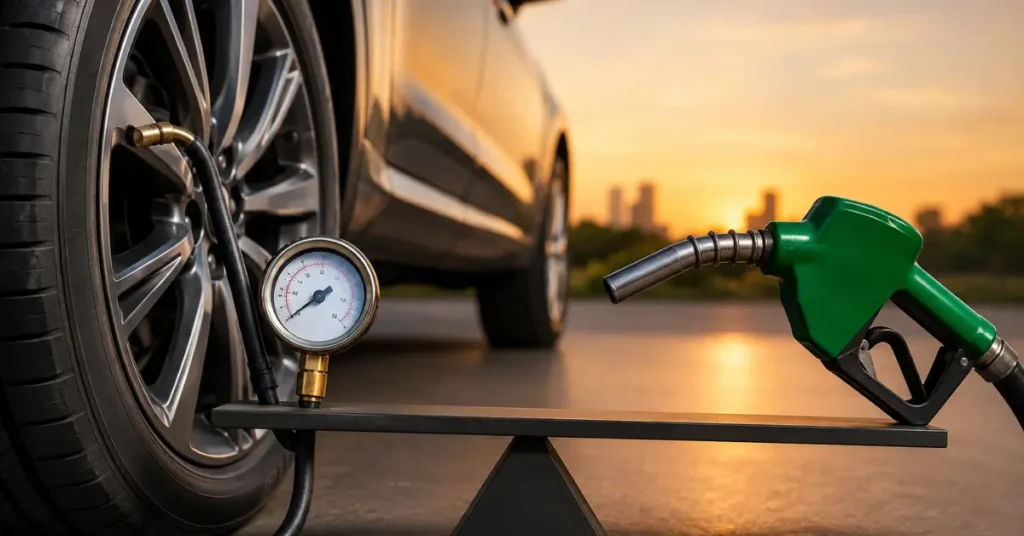
Fuel prices have been rising, and this means that one should always be concerned about fuel efficiency when driving. Many individuals pay attention to the engine performance and the quality of fuel, but not to one simple thing: Tire Pressure and Fuel Consumption. Under-inflation in tires leads to an increase in the rolling resistance and thus increases fuel consumption by requiring extra energy from the engine.
On the other hand, tires filled with adequate air ensure easy mobility, better handling, and less fuel consumption. This complete guide will tell you everything about tire pressure influence on fuel economy, the right tire pressure for your car, and useful recommendations concerning the maintenance of your tires.
What Is Tire Pressure?
The tire pressure refers to the volume of air in the tires expressed in pounds per square inch (PSI). How to improve the car fuel average.
There is a recommended tire pressure for all vehicles, which has the best combination of:
- Fuel economy
- Tire longevity
- Comfort
- Safety
- Driving experience
This information is provided in the:
- Driver’s door sticker
- Owner’s manual
- Website of the manufacturer
How Does Tire Pressure Affect Fuel Consumption?
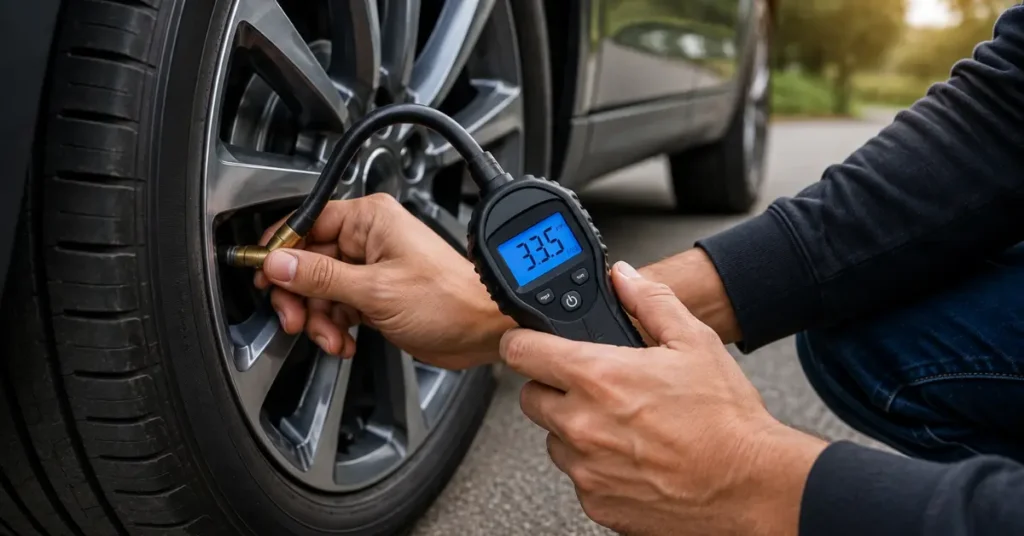
Tire Pressure and Fuel Consumption that is lower than what is recommended causes the tire to flatten and create more surface area to come into contact with the road.
This leads to increased rolling resistance and more work for the engine to drive the car.
Consequences:
- Fuel use is increased
- Less mileage
- More strain on the engine
- More tire wear
Research has shown that extremely low tire pressure can cause a reduction in fuel efficiency by several percentage points.
Benefits of Proper Tire Pressure
The advantages of maintaining your tires at the correct tire pressure are numerous.
1. Increased Fuel Efficiency
Having the right tire pressure decreases rolling friction, enabling you to drive for longer distances on the same quantity of fuel.
2. Prolonged Tire Wear
Having evenly distributed tire wear ensures that your tires will last longer and save you money on tire replacements.
3. Enhanced Safety
Right tire inflation gives you:
- Improved braking ability
- Improved steering
- Road traction
Decreased chances of blowing out your tires
4. Better Comfort
Proper tire inflation helps the tires to absorb road bumps more effectively and stay stable.
5. Reduced Carbon Footprint
With improved fuel efficiency, emissions are lowered.
Risks of Low Tire Pressure
When driving on underinflated tires, you could end up with:
- Poor fuel mileage
- Uneven tire wear
- Tire overheating
- Tire blowouts
- Poor brake efficiency
- Poor handling
- Higher maintenance costs
Risks of Overinflated Tires
Excess air is not good either.
Overinflated tires can lead to:
- Poor traction
- Rough ride
- Center tread wear
- Increased stopping distance
- Risk of impact damage
It’s always best to inflate your tires according to the manufacturer’s recommended PSI rather than using the maximum value found on the sidewall.
How to Check Tire Pressure
The process of checking tire pressure is very easy and quick.
Step 1
Always check the tires when they are cool.
Step 2
Remove the valve cap.
Step 3
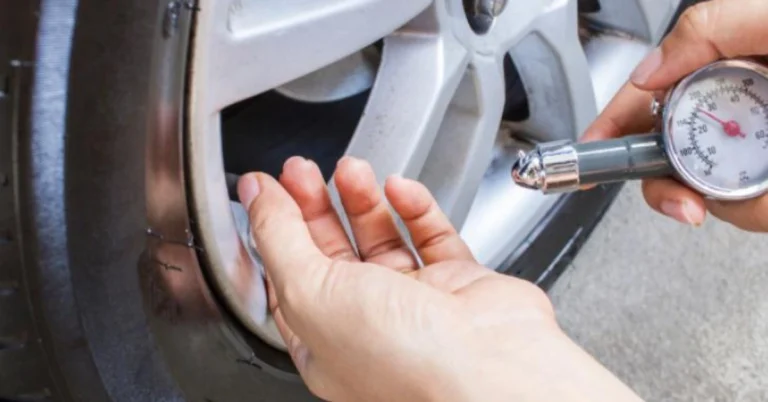
Put a tire pressure gauge to the tire.
Step 4
Get the reading of PSI (Pounds per Square Inch).
Step 5
Let out some air or pump air into the tire till the pressure reaches the desired level.
Step 6
Close the valve cap.
How Often Should You Check Tire Pressure?
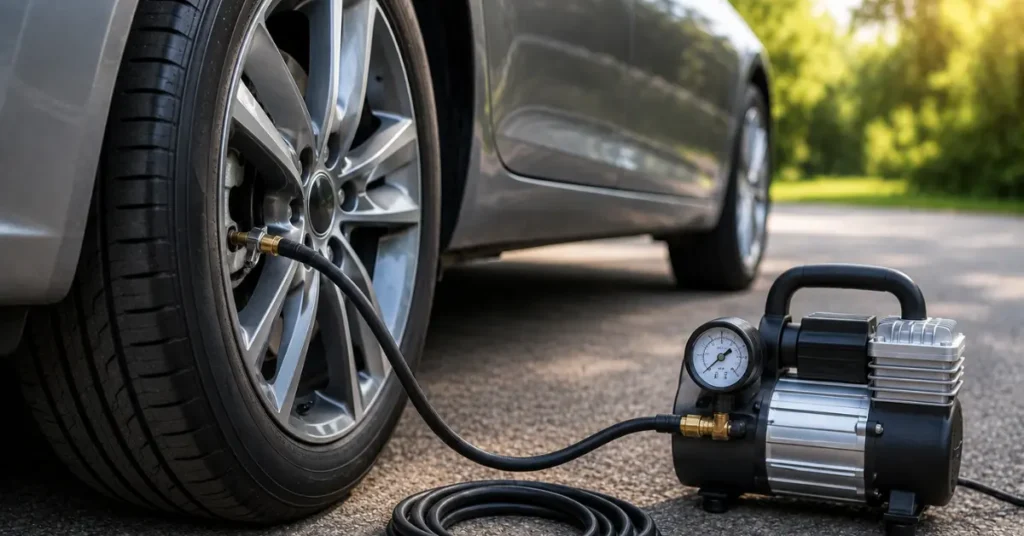
Experts suggest that you check your tire pressure:
- Once a month
- Before any long-distance travel
- Following significant changes in temperature
Whenever the Tire Pressure Monitoring System (TPMS) light turns on, Tire Pressure and Fuel Consumption
Recommended Tire Pressure
Most passenger vehicles require between 30 and 35 PSI, but the correct value varies by vehicle. Always use the pressure specified by the manufacturer rather than a generic recommendation.
Seasonal Changes and Tire Pressure
Temperature has a significant effect on tire pressure.
Winter
Cold weather causes air to contract, reducing Tire Pressure and Fuel Consumption.
Summer
Hot weather causes air to expand, increasing tire pressure.
For this reason, check tire pressure whenever the seasons change.
Other Ways to Improve Fuel Economy
Good tire pressure performs most effectively when combined with proper maintenance procedures.
Wheel Alignment Maintenance
Incorrect wheel alignment causes higher rolling resistance. Tire Pressure and Fuel Consumption.
Regular Tire Rotation
Uneven tire wear reduces efficiency.
Smooth Driving
Avoid sudden acceleration and braking.
Unnecessary Weight Removal
The lighter the car is, the less fuel is needed.
Using Proper Engine Oil
The use of low-friction oil may enhance efficiency.
Tire Balance
Balanced tires result in reduced rolling resistance
Common Tire Pressure Mistakes
Watch out for these mistakes:
- Checking the pressure right after driving
- Inflating the tire’s sidewall to the maximum pressure
- Not considering changes in seasons
- Not checking the spare tire
- Using an inaccurate gauge
- Not paying attention to TPMS warning lights
Conclusion
It is one of the cheapest methods that helps to increase the efficiency of the car, its lifetime, and to increase the safety of the driver. Checking and keeping the tire pressures on the proper level will decrease fuel consumption and increase the comfort of the ride.
Frequently Asked Questions: Tire Pressure and Fuel Consumption
Does low tire pressure increase fuel consumption?
Yes, because underinflated tires increase the rolling resistance and, therefore, the engine uses more fuel.
Can proper tire pressure improve gas mileage?
Yes, proper tire pressure does translate to less rolling resistance and better fuel economy.
What should be the optimal tire pressure?
The proper PSI is what is stated in the vehicle manufacturer’s guidelines.
Should tires be inflated to the maximum PSI shown on the tire itself?
No, you want to check the sticker on the door jamb and the manual.
How often do you need to check the tires?
At least monthly and before any long-distance travel.
Do all four tires need to have the same pressure?
No, not all cars require all four tires to be filled to the same pressure.
Is it necessary for all four tires to have equal pressure?
Not all vehicles have the same tire pressures on all four tires.