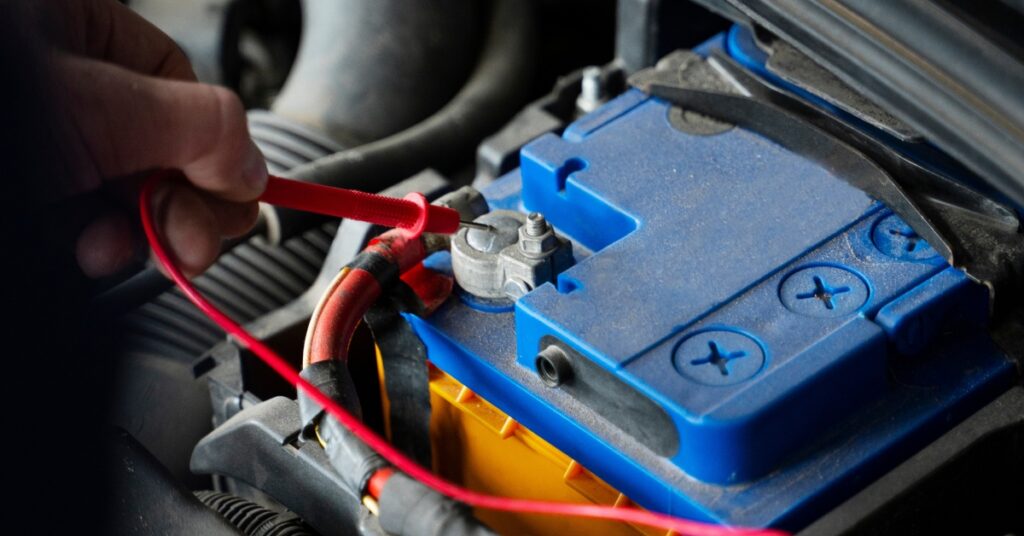
We have all been there. You are in a rush to go to work, and you get into your car. But all you hear is a clicking noise. It is an irritating experience of which every driver is all too familiar, yet you need not be afraid that you will be caught off guard by an unexpected dead battery.
Learning how to test a car battery with a multimeter is the best way to be ahead of this problem. It is such an easy DIY activity that gives you confidence and ensures your car is always ready to go on the road.
Why You Need a Multimeter
A multimeter is a small device that measures electricity. They are pretty cheap and available in every hardware store.
Think of it as a thermometer for the heart of your car. It informs you just what the exact amount of the so-called life in your battery is before it really dies.
Most people wait until their car won’t start to think about their battery. By then, it is already too late and usually results in an expensive tow.
Signs Your Battery is Getting Weak:
- Your engine takes longer than usual to start or “crank.”
- The interior lights appear dim when the engine is switched off.
- You see a warning light on your dashboard.
- Your power windows respond more slowly than before.
Steps to Test a Car Battery with a Multimeter
This test is simple and does not demand complicated mechanical experience. All you have to do is follow these simple steps to achieve a good reading.
- Set Your Device
Adjust your multimeter to the DC Voltage mode. This can generally be indicated with a V and a straight line or dots.
Set the number to 20V. This range allows the device to read your battery’s 12 volts with perfect precision.
- Connect the Probes
Touch the red probe to the positive terminal on your battery. This terminal is often red or has a small plus sign.
Touch the black probe to the negative (-) terminal. This one is usually black or marked with a minus (-) sign.
- Read the Result
Look at the digital screen on your multimeter. It will immediately show a number, which is your battery’s resting voltage.
Understanding the Numbers
Reading what is on the screen is not very difficult, but the trick is to make sense of those numbers. The following is a simple concept of what your battery is informing you about:
- 12.6V or higher: Your battery is healthy and fully charged.
- 12.4V: Your battery is approximately 75% charged up, so that is still good.
- 12.2V: Your battery is only half-charged and may struggle in cold weather.
- 12.0V or less: Your battery is flat and requires a deep charge or replacement.
If your reading is below 10 volts, your battery cannot be saved.
The Engine Crank Test
Sometimes a battery looks okay while sitting still, but fails when it actually has to work. This is why we do a “crank test.”
Have a friend start the engine while you keep the probes on the battery. Watch the multimeter screen very closely during this moment.
As the engine switches on, the voltage will momentarily drop. This checks your battery’s strength.
If the number is above 9.6 volts, your battery is strong. If it drops into the 8s or 7s, your battery is very weak and should be replaced.
Keeping Your Battery Happy
You have learned how to check your battery; it’s time you should learn how to keep it in good health. Small practices count a lot.
Always ensure you turn off your interior lights when you are leaving the car. A battery can be emptied by a small light overnight.
When you make short trips (under one hour), you never get a full charge on your battery. At least once a week, attempt to make a longer drive of 20 minutes.
Keep the terminals clean. Even a small amount of dirt can also stop the electricity flow and force your battery to work harder. The only way to prevent that from happening to you is to test your battery every few months. It does not consume much of your time.
Conclusion
Caring about your car is not an enigma. Checking your own vehicle is something you can do without laying a single dime in a professional repair shop.
You are placing your morning commute in your hands when you test a car battery with a multimeter. You are ensuring that your car is in good shape and is worth your next adventure.
It is a basic DIY talent that instills trust and cuts expenses. When there is a slow crank next time, do not guess and find the true story with your multimeter.