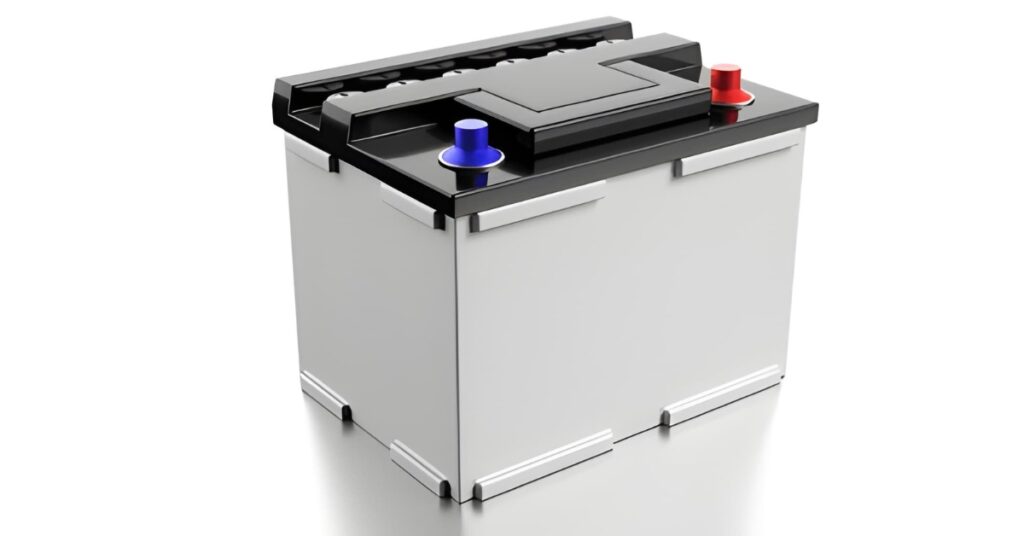
There is never a good time for a car battery to die. Whether it is a day to race to the office or to a weekend outing, that hated clicking of the motor is a worldwide symbol of frustration.
One of the most empowering DIY skills every driver can acquire is learning how to replace a car battery. It will save you the labor of a mechanic and will save you an agonizingly protracted wait until a tow truck is called in.
In this guide, we will take you through the detailed process of putting your vehicle back on the road safely.
Tools You Will Need
You don’t even need a workshop to complete this task. Just a couple of simple hand tools, available in most household toolboxes, usually do the job.
- Socket set and adjustable wrench
- A battery cleaning tool or a plain wire brush.
- Anti-corrosion spray or some lithium grease.
- Battery carrying strap
How to Replace a Car Battery in Easy Steps
Replacing a battery is a straightforward process of “out with the old, in with the new.” The order in which you disconnect the cables is critical.
1. Find the Terminals
Lift the hood and locate the battery. Find the positive (+) terminal, typically with a red cap, and the negative (-) terminal, typically with a black cap.
When there is a white crusty stuff that covers the terminals, that is nothing but corrosion. Do not touch it with your bare hands since the residue of the acids may irritate your skin.
2. Disconnect the Negative Cable First
This is the golden rule of battery replacement. The negative (black) cable clamp has a nut that is loosened first by using a wrench.
Unhook the cable, and push it out of the way; it can not just spring back and touch the terminal. This will eliminate an electric short should your wrench come in contact with the metal frame of your car.
3. Disconnect the Positive Cable
When the negative has been safely cleared, then do the same to the positive (red) cable.
Be careful not to touch both terminals of your metal wrench simultaneously. This can produce an enormous spark, which could shock you or break your equipment.
4. Remove the Hold-Down Bracket
A bar or a bracket will keep most batteries in place. Unscrew the bolts in this bracket using your socket wrench. Put the bolts somewhere safe.
5. Take Out the Old Battery
Batteries are extremely heavy in proportion to their size and sometimes weigh as much as 50 pounds. Grab it with your hands and shift it using a carrying strap.
Put the old battery on an even surface. This is better when kept upright and not laid flat so that internal fluid cannot leak out.
6. Clean the Terminal Clamps
Before you drop the new unit in, take a moment to clean the cable connectors. Apply a wire brush to remove any gunk that was left until the metal appears shiny and new.
The clean terminals guarantee good electrical contact. This assists your alternator to charge the battery accordingly, and your car will start with the first turn.
7. Install the New Battery
Put the new battery into the tray. Assure that the positive and negative posts are facing in the same direction as the old battery. Re-fit the hold-down bracket.
8. Connect the Positive Cable First
In reassembling, you use the reverse order of removal. Insert the positive (red) cable into the terminal and screw the nut as tightly as possible.
Now, put anti-corrosion grease in a small dab at the terminals. This is an easy measure that helps to avoid accumulation in the future and makes your electrical system healthy.
9. Connect the Negative Cable Last
Finally, attach the negative (black) cable. You might see a tiny, harmless spark when the metal touches; this is just the car’s computer and clock waking back up.
Tighten this connection firmly. A loose negative cable is one of the most common reasons a car won’t start, even after a brand-new battery is installed.
Disposing of Your Old Battery
Do not discard a car battery in the garbage. It contains lead and acid, which are harmful to the environment.
Almost every auto parts store will take your old battery for free. Most will even give you a “core charge” refund of $15 or $20 for bringing it back to them.
Conclusion
Knowing how to replace a car battery is an excellent way to gain your own mechanical confidence and save some money. Following the rule of negative-off first, negative-on last, you will make the process safe and easy.
You can also avoid being left stranded in the future by checking your battery frequently to ensure it is tight and cleaning your battery to remove any white crust. And now, with a turn of the key, watch that engine come alive and go on the ride!