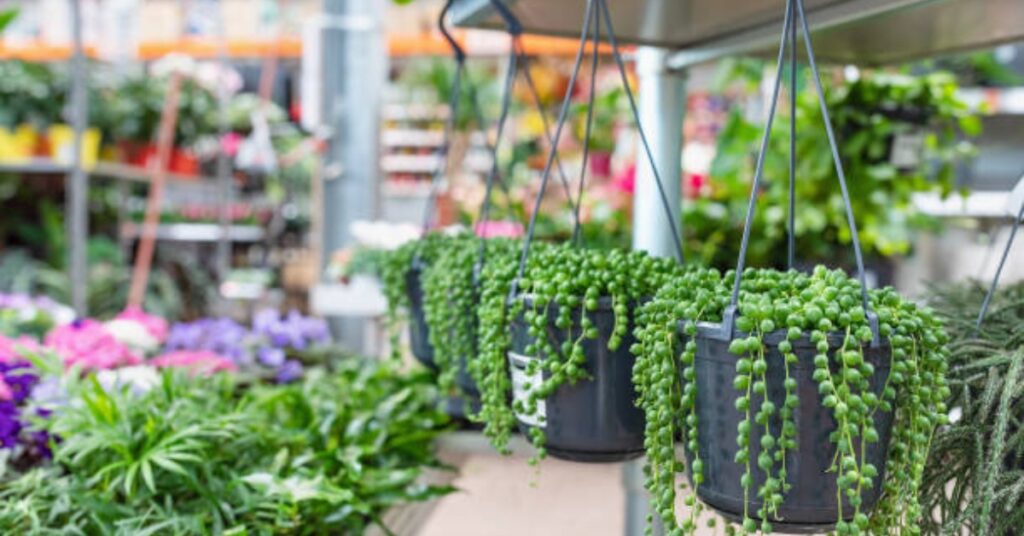
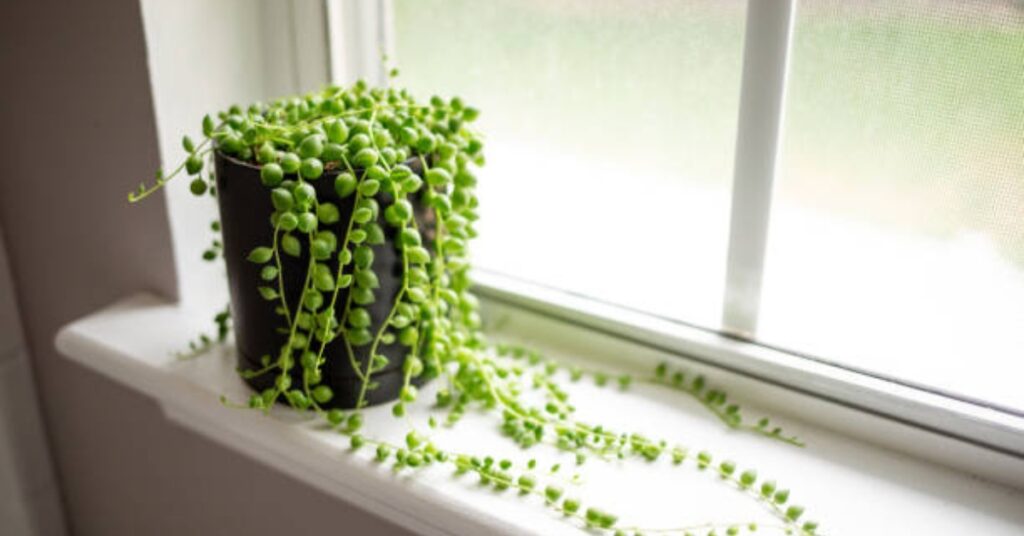
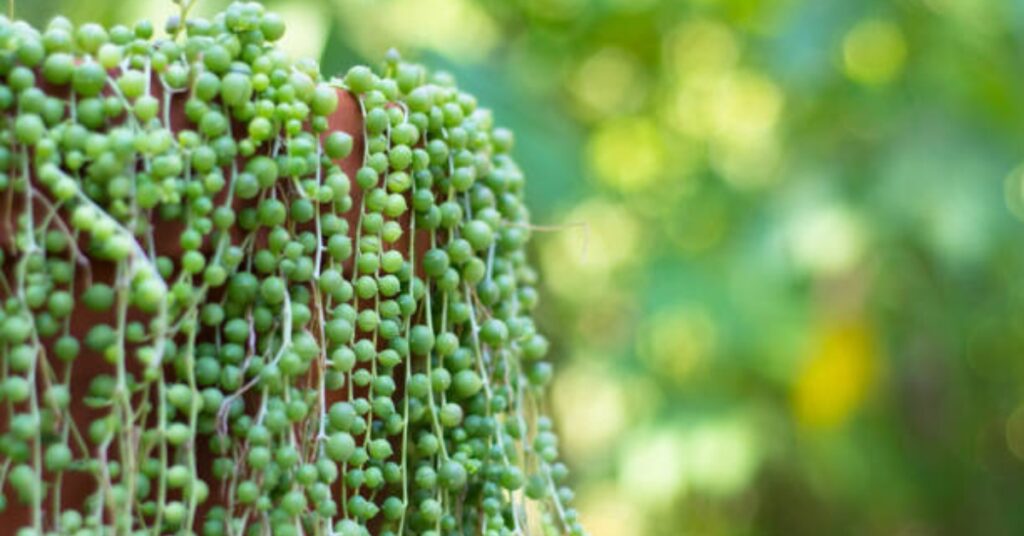
Many indoor gardeners will easily adore succulents due to their beauty, yet Curio rowleyanus is the type of plant that deserves special attention. This plant does not have flat leaves but long and thin stems, which are covered by tiny bubble-shaped green leaves. It will be spectacular in a hanging pot or on a high bookshelf where the vines can cascade down.
Looking after a string of pearls is not a secret. Most individuals believe that they are difficult to maintain, but the trick is to do less. This is a plant native to the dry African areas. The environment must be charged with a bit of a sunny desert to make it happy. These green beads will sprout into a rich, flowing curtain, with the right light and very little water.
1. Pick the Right Spot for Light
The most significant thing for this plant is light.
- Bright but Soft: The plant should be placed in a place where a lot of sunlight is coming.
- Avoid Afternoon Sun: Midday sun may change the green beads into brown or shrink them.
- Light at the Top: Do not forget to have light on the top of the pot. When the sun only reaches the hanging vines, the top of the plant will become bald and thin.
2. The Best Way to Water
Most people kill this plant by overwatering it. The beads are round and resemble small water tanks. They retain moisture such that the plant can last a long time without taking a drink.
- The Finger Test: Water only when the ground is absolutely dry.
- Look at the Beads: The string of pearls will start becoming wrinkled when the plant is thirsty.
- Less in Winter: The plant is dormant in winter. During the cold season, you may only be required to water it once a month.
3. Use the Right Dirt and Pot
Ordinary garden soil has excessive water. This makes the roots rot and decay into mush.
- The Happy Soil Blend: Buy a bag of soil that is capable of growing cactus and succulents. To give it an extra good touch, you may add some perlite or coarse sand. This helps to guide the water flowing in the pot instead of stagnating over the roots.
- Pot with a Hole: The terracotta pots are a fantastic choice. They can breathe, which speeds up soil drying.
4. Temperature and Fresh Air
These plants enjoy a warm, dry home.
- Stay Warm: The room should be maintained between 70°F and 80°F. The winter makes it a bit colder, but avoid freezing temperatures.
- No Misting: Do not sprinkle the pearls with water. They do not like damp air. Therefore, a steamy bathroom is not where they belong.
5. Feeding Your String of Pearls
This plant does not require frequent feeding. Liquid plant food can be used during the spring and the summer. Do not forget to add lots of water to it to make it not too strong. Once a month is plenty. During fall and winter, do not feed it at all.
6. How to Make More Plants
In case the vines are too long or seem a little bit thin, you can cut them. This, in fact, makes the plant grow thicker. You can also use the cut-off to grow more plants.
- Trim: Cut a healthy strand of about 4 inches.
- Clean: Peel the last several pearls near the cut end to leave a bare stem.
- Plant: Stick that bare stem down into a pot of fresh soil.
- Wait: Within a few weeks, the stem is going to sprout roots and begin a whole new plant.
7. Solving Common Problems
When the plant seems unhappy, do not worry. Usually, it is a simple fix.
- Shriveled Pearls: This is a usual sign that the plant is dry. But when the soil is moist, and the pearls are drying, the roots can be rotten with surplus moisture.
- Sticky Residue: Wipe the plant off with a cotton swab with rubbing alcohol in case of sticky spots.
- Falling Beads: This may occur when the plant is frequently moved.
Conclusion
A string of pearls in a room adds beauty and calm. You do not need to be a professional gardener to keep one alive. All you have to remember is that it is fond of light, hates wet feet, and mostly prefers working alone. With just a few simple steps, those little green beads will transform any home into a garden-like space.