Imagine the time when someone overtook you on the road. You stepped on your brakes, and your car stopped just in time. The relief that came about is all courtesy of your brake pads.
They are the unspoken heroes in the car. However, they are made to wear out gradually. They eventually get so thin that they can no longer work.
That is why it is so crucial that every driver should know how often to replace brake pads. In this guide, we will consider the indicators of wear and the most appropriate schedule of replacement so that you can have your car ready to pull.
Factors That Influence Brake Wear
All drivers will be required to change their pads at the same time. Several variables determine how quickly that friction material wears away.
- Driving Habits: When you have the habit of stopping abruptly, your pads will wear out sooner. Gradual braking that is smooth is also a perfect way of saving the life of the pads.
- Driving Environment: City driving is filled with stop-and-go traffic, and that is brutal on brakes. On the other hand, highway driving provides hours of driving without pressing the brakes.
- Vehicle Weight: The weight of vehicles puts more pressure on the pads. It makes them wear out more quickly than those in a small car.
- Brake Pad Material: Organic pad is soft and silent at the expense of having a short life span. Semi-metallic and ceramic pads are far more durable. They are capable of withstanding high temperatures much better.
How Often to Replace Brake Pads: The General Timeline
Most automobiles need new brake pads after every 30-70 thousand miles on average. This is an extensive range owing to the above variables.
Some drivers travel on open highways and can reach 80,000 miles before a change is required. Nevertheless, wear may occur at only 25,000 miles in urban areas.
The owner’s manual is the surest way of understanding how often to replace brake pads in your specific model. Most manufacturers specify a recommended schedule of inspection.
Red Flags You Need New Brake Pads
You do not necessarily have to use the odometer to figure out that your brakes are not working. Your car will frequently tell you with both sound and feel.
- High-Pitched Squealing
Modern brake pads have a wear indicator designed into them. This is a scraper pad and is made of a small piece of metal that rubs against the rotor when the pad becomes too thin. When you hear a constant screeching while driving, it is time to get it checked.
- Deep Grinding Noises
When you hear a sort of metal rubbing against metal, you have probably worn out the pad to the last drop. This is a risky scenario that must be addressed at once. At this point, the pad rotor is being dug at by the metal backing plate. This will destroy your rotors and drastically add to your stopping distance.
- Vibrations or Pulsing
Do you feel the steering wheel or the brake pedal vibrating when you apply the brakes? It is commonly an indication of distorted rotors or unevenly worn pads. It does not mean the pads are not there, but that means the system is failing. The pads may have heat spots, causing inconsistent braking performance.
- Thinning Pad Thickness
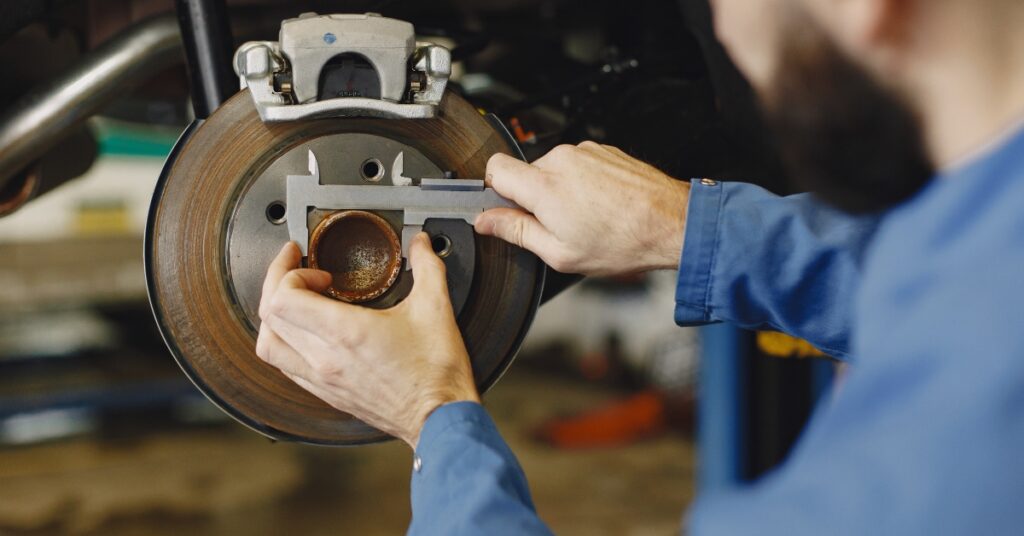
You can always peek at the brake pads through the spokes of your wheels. Check the pad on the polished metal rotor. Once the friction material is discovered to be less than a quarter-inch thick (say, 3 millimeters), it is time to go to the shops and purchase new ones.
- The Dashboard Warning Light
Most high-end and state-of-the-art automobiles use sensors to activate a dashboard indicator when the pads are low. When this light appears, do not disregard it.
Easy Ways to Get More Miles out of your Brakes
You can actually save money by changing how you drive. The most important tip is to avoid the brake pedal riding. Remove your foot from the gas when you see a red light.
Try to keep your car light. If you have heavy boxes in your trunk that you don’t need, take them out.
Less weight means less work for the brakes. It also helps you save a bit of money on gas.
Finally, always invest in quality parts. Cheap brake pads wear out fast and often make a lot of dust.
Conclusion
Your brakes are the most vital aspect of your car. They sacrifice themselves to ensure your safety. Be attentive to the sounds and feel of your automobile to prevent unsafe situations. Knowing how often to replace brake pads can ensure that you can arrange maintenance. This makes your drives and your car safe.